
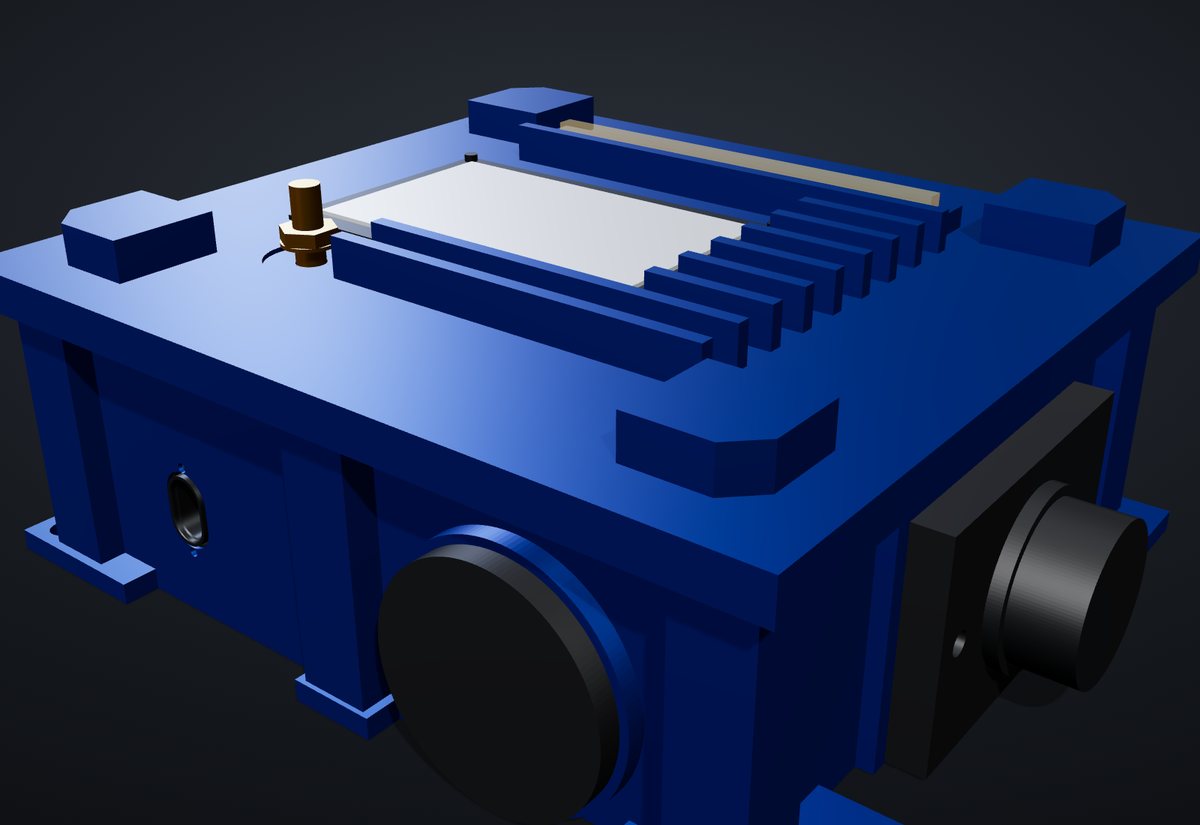
Expedition rigs carry serious electrical loads — light bars, ditch and rock lights, radios, fridges, camp lighting — usually on a rat’s nest of relays and inline fuses. The Sentinel system replaces all of it with one sealed, solid-state module.
An overland build is a load list: lighting for the trail, lighting for camp, comms, cold food, and the accessories that make a week out livable. On the PD8 those loads land on eight solid-state outputs — two 20 A channels for the heavy draws, six 10 A channels for the rest — each one switched, protected and current-sensed.
Driving and camping become scenes, not rewiring: full lighting on the move; dim camp lighting on the global dimmer once you’re parked; everything else off. Configure it once and the rig behaves the same every night of the trip.
Sentinel modules share one CAN network, so a big build isn’t one box straining to reach every corner of the truck — it’s modules placed where the loads are, each feeding its own neighbourhood. One example expedition layout:
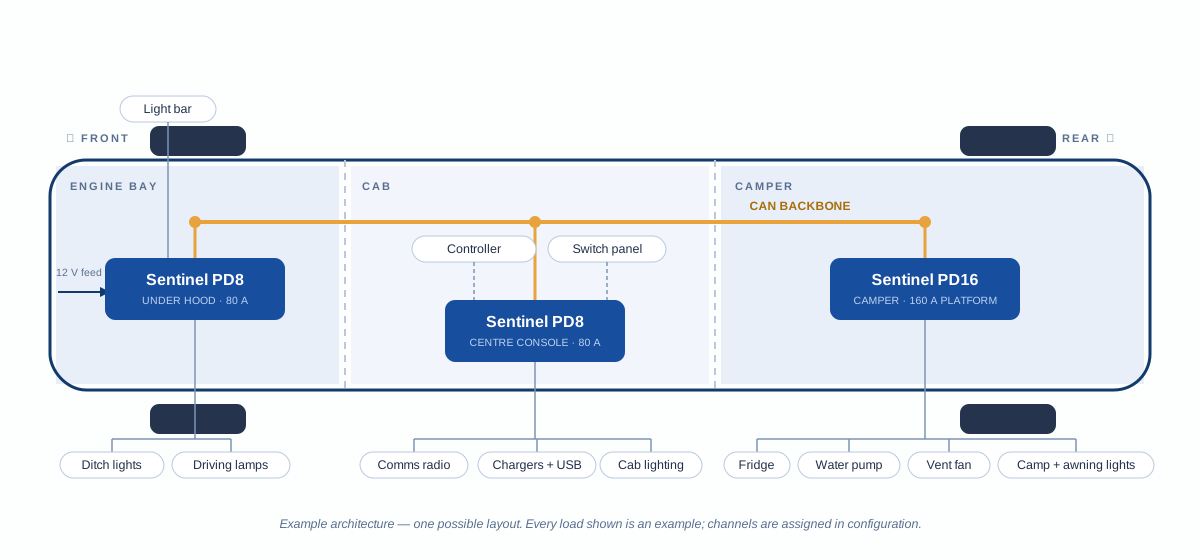
The front module lives with the engine bay and takes the heavy forward loads: the light bar, ditch and driving lamps, work lighting. Short cable runs, and the front of the truck is electrically its own zone — a fault up front never reaches the camper.
The cab module runs the human side of the rig: the comms radio, charging, cab lighting, and the switch panel and Controller it sits beside. Ten inputs take the truck’s own switches, so existing controls can trigger Sentinel loads.
Sixteen outputs where camp actually happens: fridge, water pump, vent fan, interior and awning lighting, charging. Camp mode is a scene — one button settles the whole camper for the night while the driving modules sleep.
Because the modules share a network, scenes span the whole vehicle: driving runs the front lighting and keeps the fridge cold; camp kills the exterior driving lights, brings the awning and interior up on the dimmer, and sheds anything the battery shouldn’t carry overnight. Same truck, two personalities — no rewiring between them.
No relay contacts to weld or chatter on washboard roads, and no fuse box to fill with dust. The module is sealed aluminium — the shell is the heatsink.
A shorted light bar trips its own output electronically and reports it. You fix the one circuit — you don’t lose the panel, and you’re never hunting a blown fuse by headlamp.
Sentinel Switch panels and the Controller put drive lighting, camp lighting and accessories on labelled buttons, over the same CAN network the emergency builds use.
Honest limits: loads must fit the channels — 2 × 20 A + 6 × 10 A, 80 A total on the PD8 (the PD16 doubles the platform). Winches and other very high-draw gear stay wired the traditional way; the Sentinel system runs everything else.
Light bars, ditch lights, rock lights, reverse and camp/scene lighting — with dimming, and flash patterns as configuration where you want them.
Radios, fridge circuits, charging and camp accessories within channel ratings — powered, protected and sensed like every other output.
Switch panels by the dash and the Controller touchscreen run the system. Inputs from your own switches work too — 10 of them on the PD8.